
Code produces output.
That is the entire lesson.
The problem is not the teaching of syntax itself.
The problem is that repeated exposure to this model causes students to develop an incomplete mental model of engineering.
This is the question every course quietly trains for:
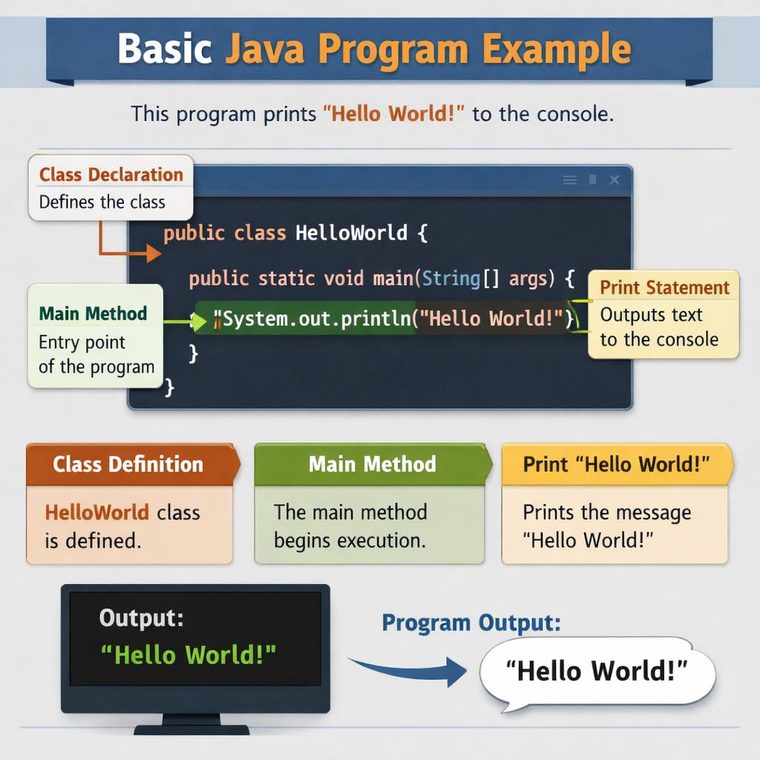
Tested for syntax correctness. Qualified when output matches expectation.
This isn't just about code. It's true of almost anything built.
Picture a finished bridge. Everyone who drives across it sees the same thing: a road, some cables, cars moving smoothly. That's the visible work — and for almost everyone, that's the whole story.
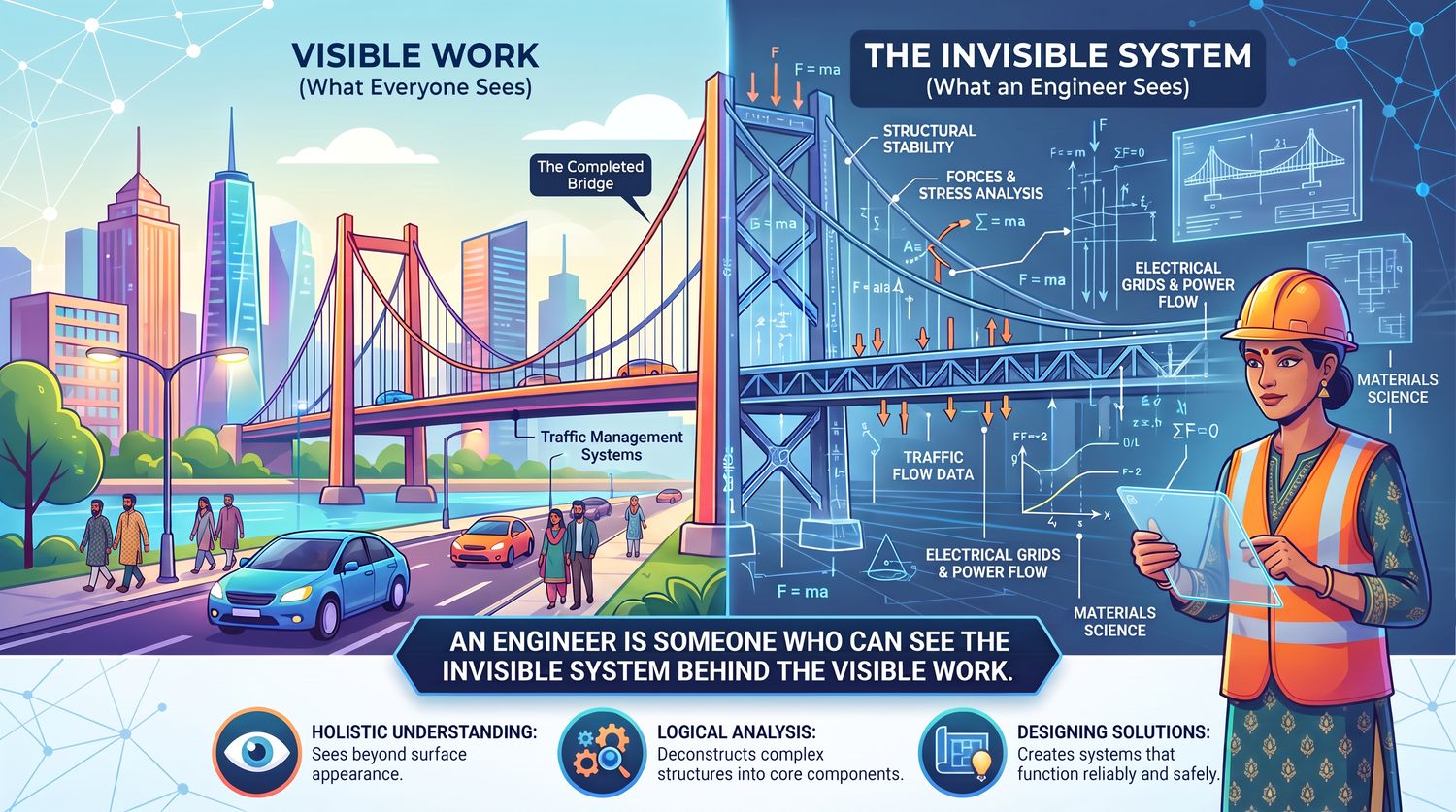
An engineer looks at that exact same bridge and also sees what's holding it up — the forces pressing down on it, the materials chosen for a reason, the traffic patterns it was actually designed around. That's the invisible system. Nothing about the bridge changed — only how much of it one person can see.
Remember that "Hello World" program? Here's everything it was quietly doing.
The student sees three lines of code, and one line of text appearing on screen. That's it — that's the whole lesson. But the moment that program runs, an entire invisible system switches on underneath it: a compiler translates the words into instructions, a virtual machine manages memory, the operating system talks to the hardware — and only after all of that does "Hello World" reach the screen.
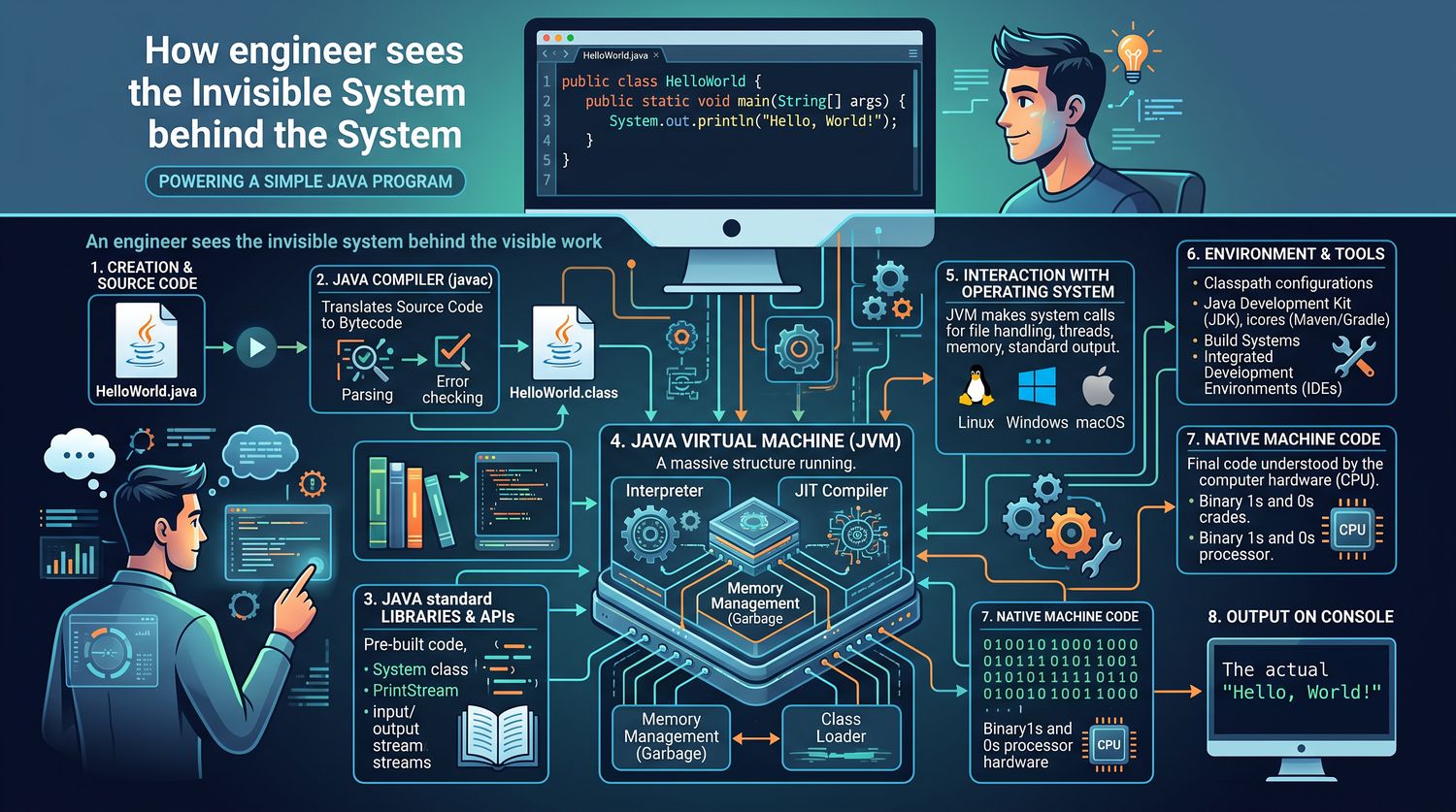
This is the invisible system a real engineer learns to see — even behind the simplest, most familiar program.
Same shortcut — now in full resolution
The simplified version on the last slide was real, but simplified. Here's the whole loop: how the shortcut forms on both sides, why it keeps getting rewarded, and where the two paths quietly converge.
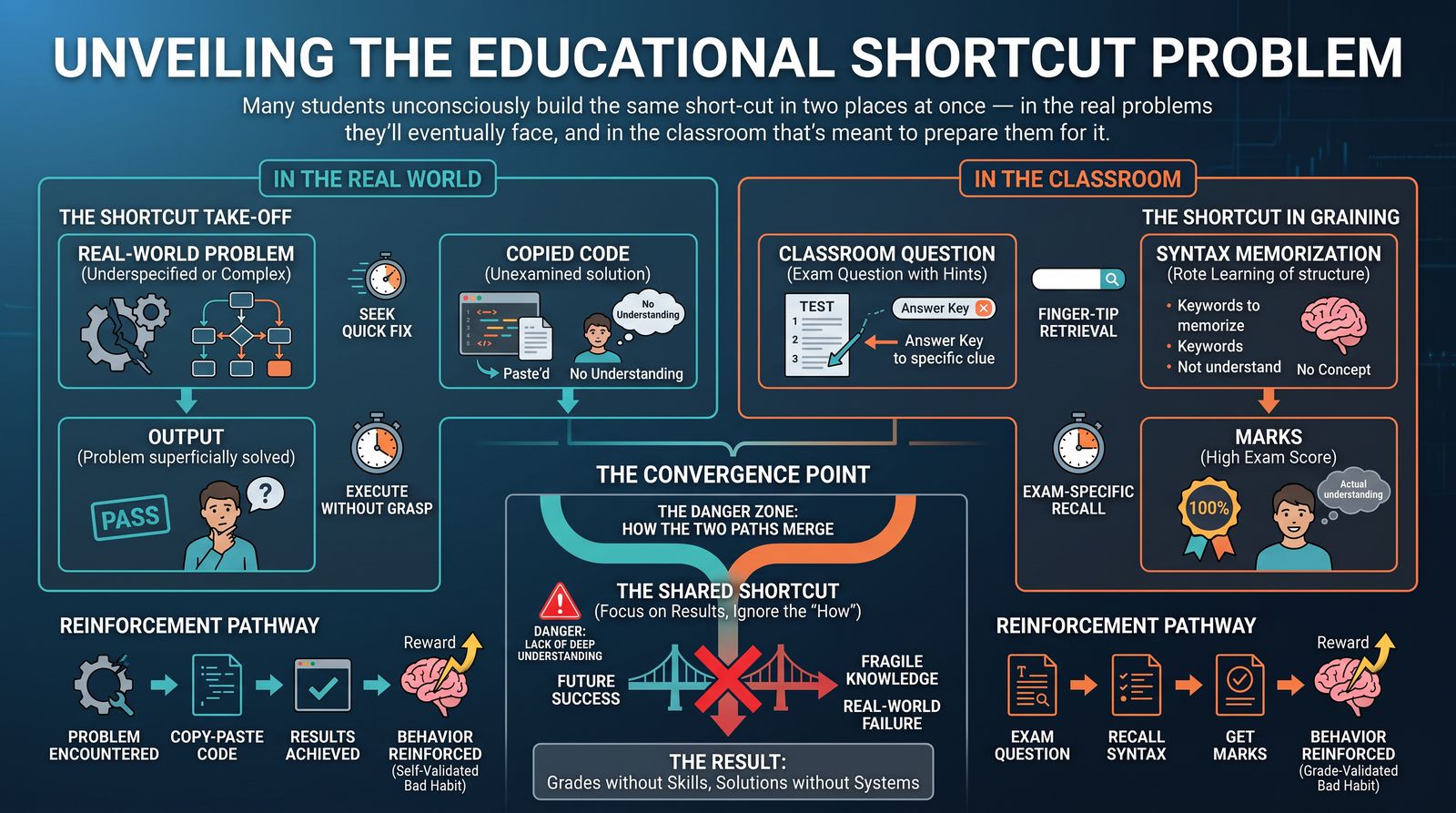
The result: grades without skills, solutions without systems.
What school trains for, and what the job actually asks
Put side by side, the mismatch is hard to miss.
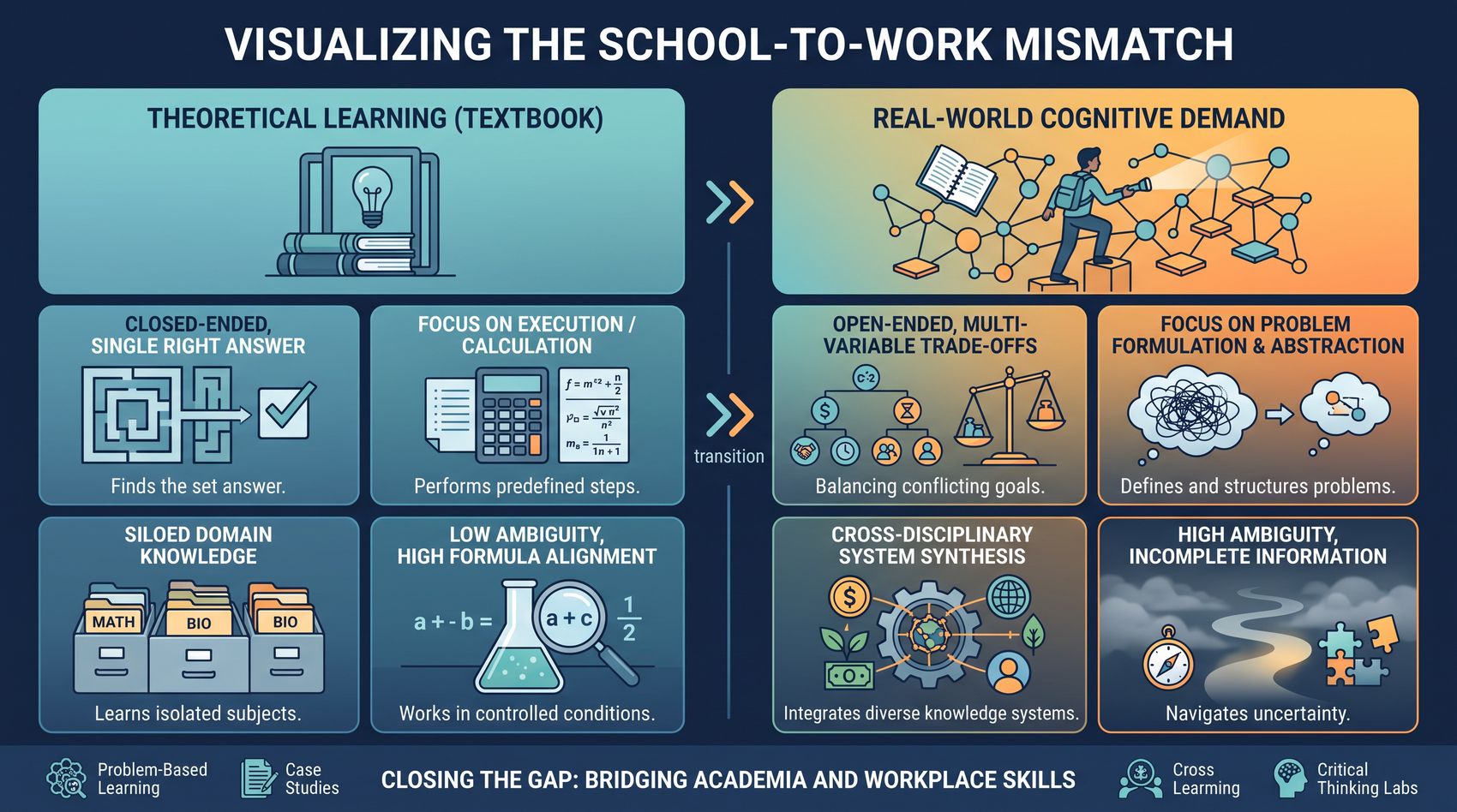
Closing this gap takes problem-based learning, case studies, cross learning, and critical thinking labs — not more of the same.
Attention drifts toward symbols, away from systems
Over time, the student's mental focus quietly relocates from one vocabulary to another.
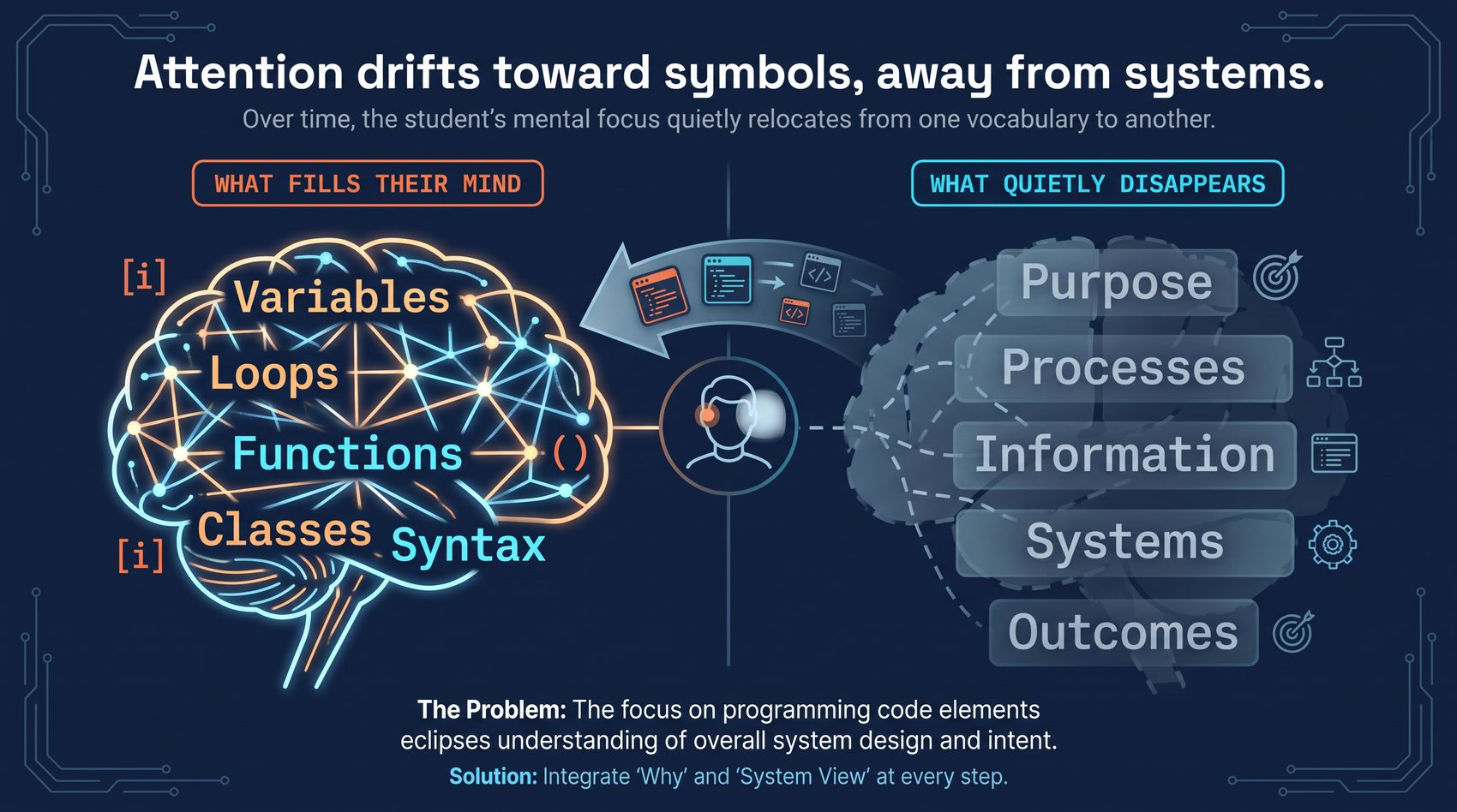
The focus on code elements eclipses understanding of the system's design and intent. The fix: integrate "why" and "system view" at every step.
Seven layers disappear from view
What the student sees is Code and Output. What they no longer see is everything Code was built to serve.
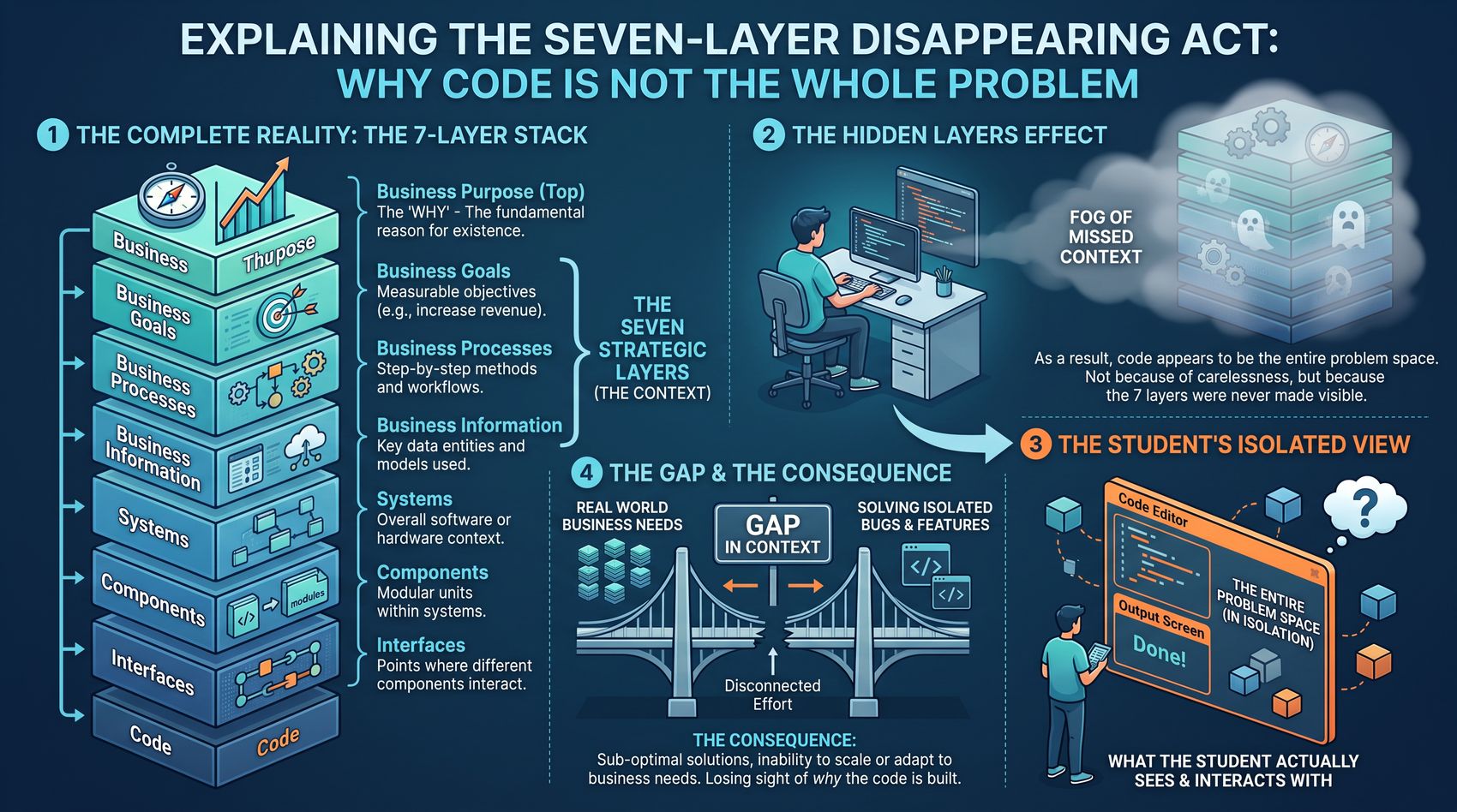
Not because the student is careless — but because the seven layers above Code were never made visible to begin with. What's missing isn't ability. It's the map.
Not a skill gap — a component mindset instead of a system mindset
Students learn to see isolated parts. They do not learn to see relationships.
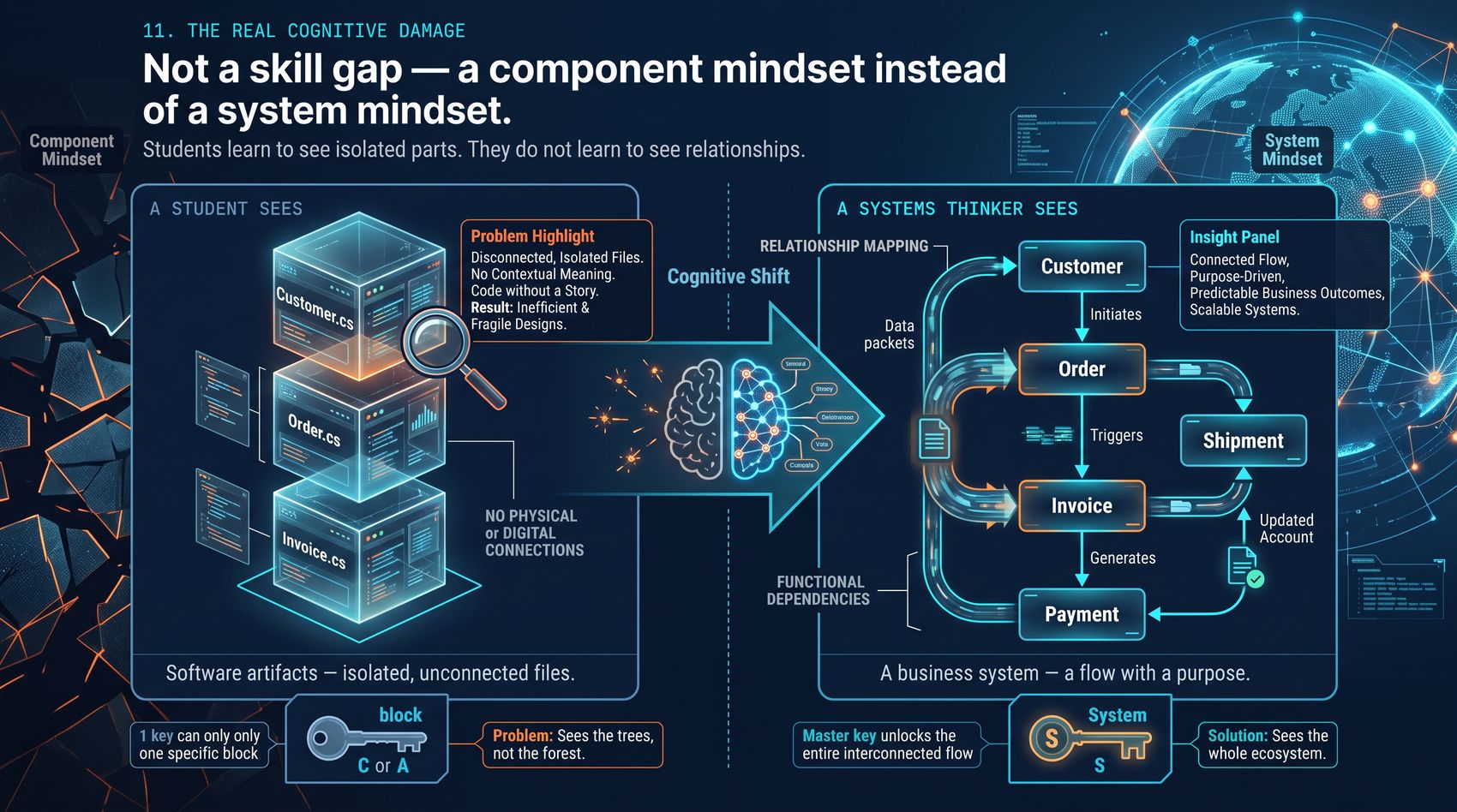
Software artifacts — isolated, unconnected files. A business system — a flow with a purpose.
Why students end up staring at code, hoping to understand
When confronted with a real application, the student lacks a mental model of the business. The only visible artifact left to inspect is code itself — so they start reading it top to bottom, hoping meaning will emerge.
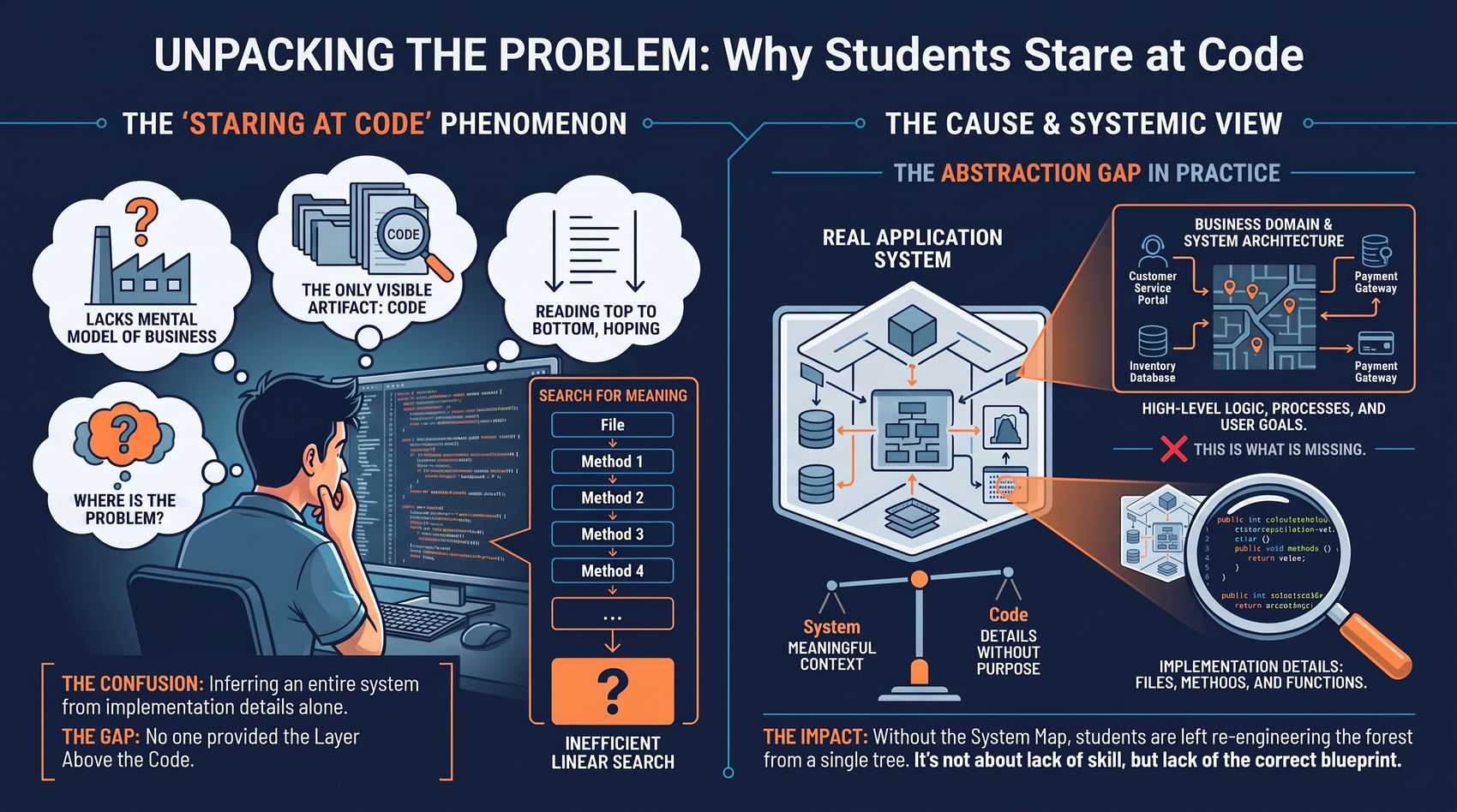
The gap isn't intelligence. It's that no one ever handed them the layer above the code — it's not about lack of skill, but lack of the correct blueprint.
A different sequence, seven steps deep
A real engineer holds the full chain in mind — and moves continuously between its levels.
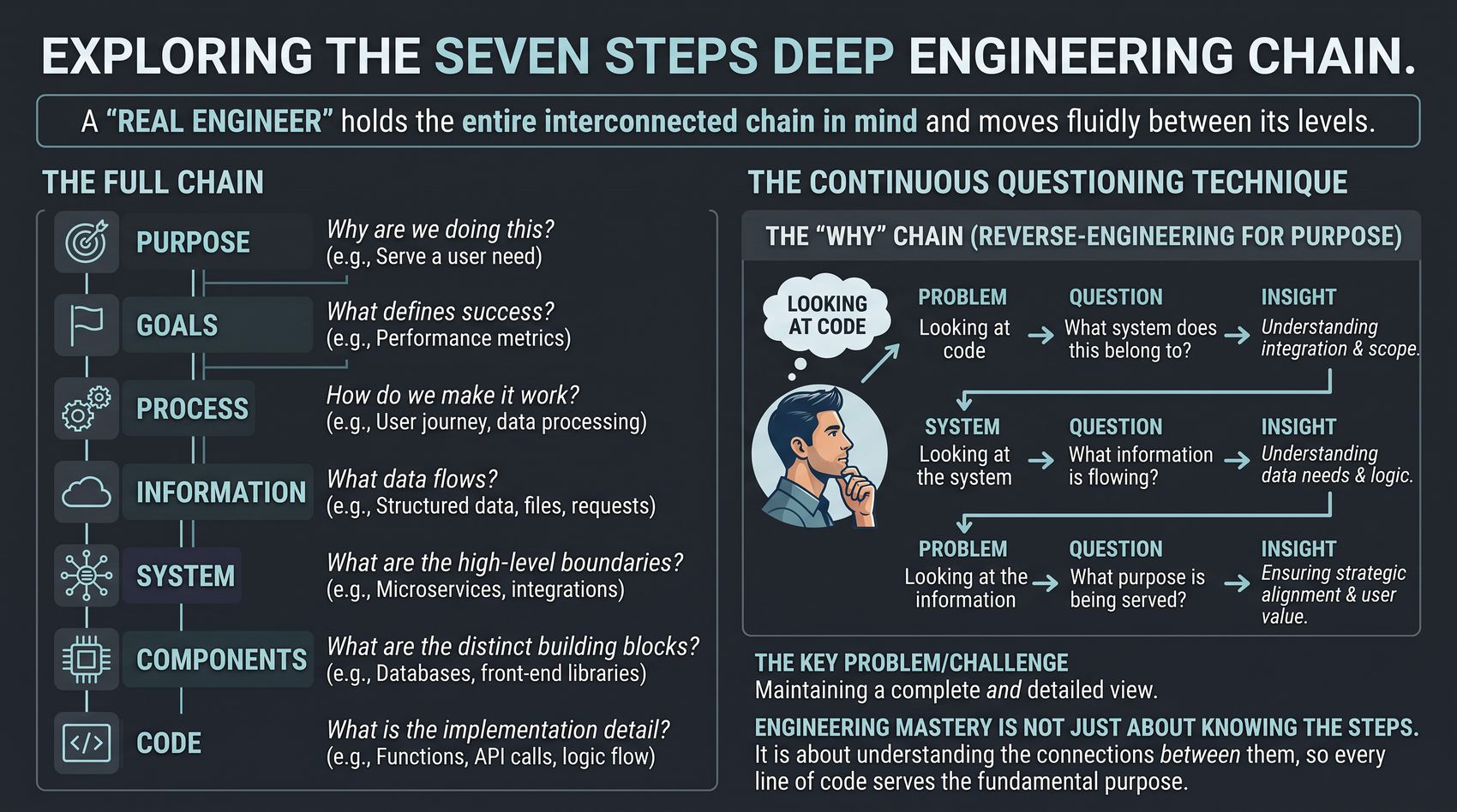
Engineering mastery isn't knowing the steps. It's understanding the connections between them, so every line of code serves the fundamental purpose.
The cognitive gap, made visible
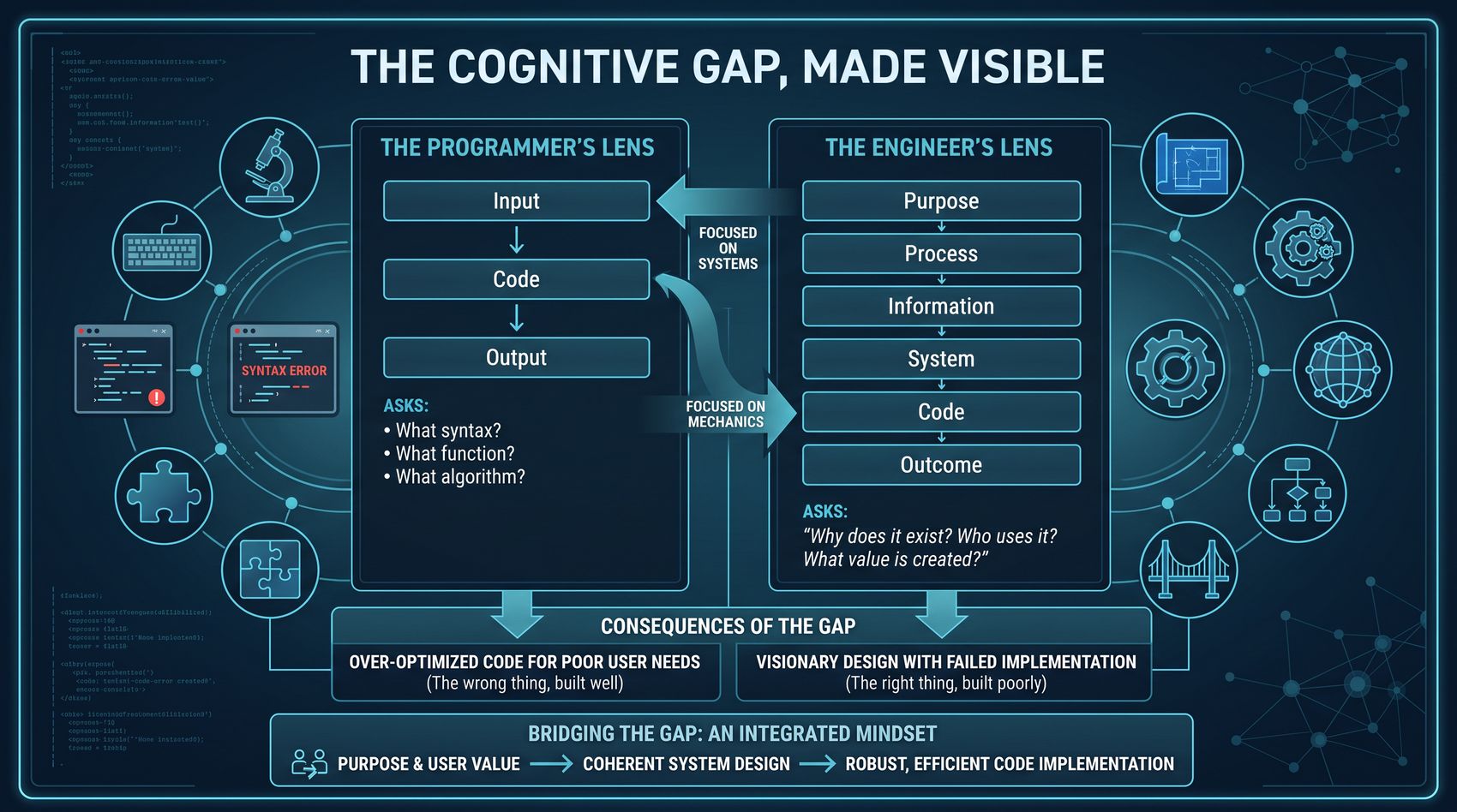
Miss either lens and you get one of two failures: the wrong thing, built well — or the right thing, built poorly.